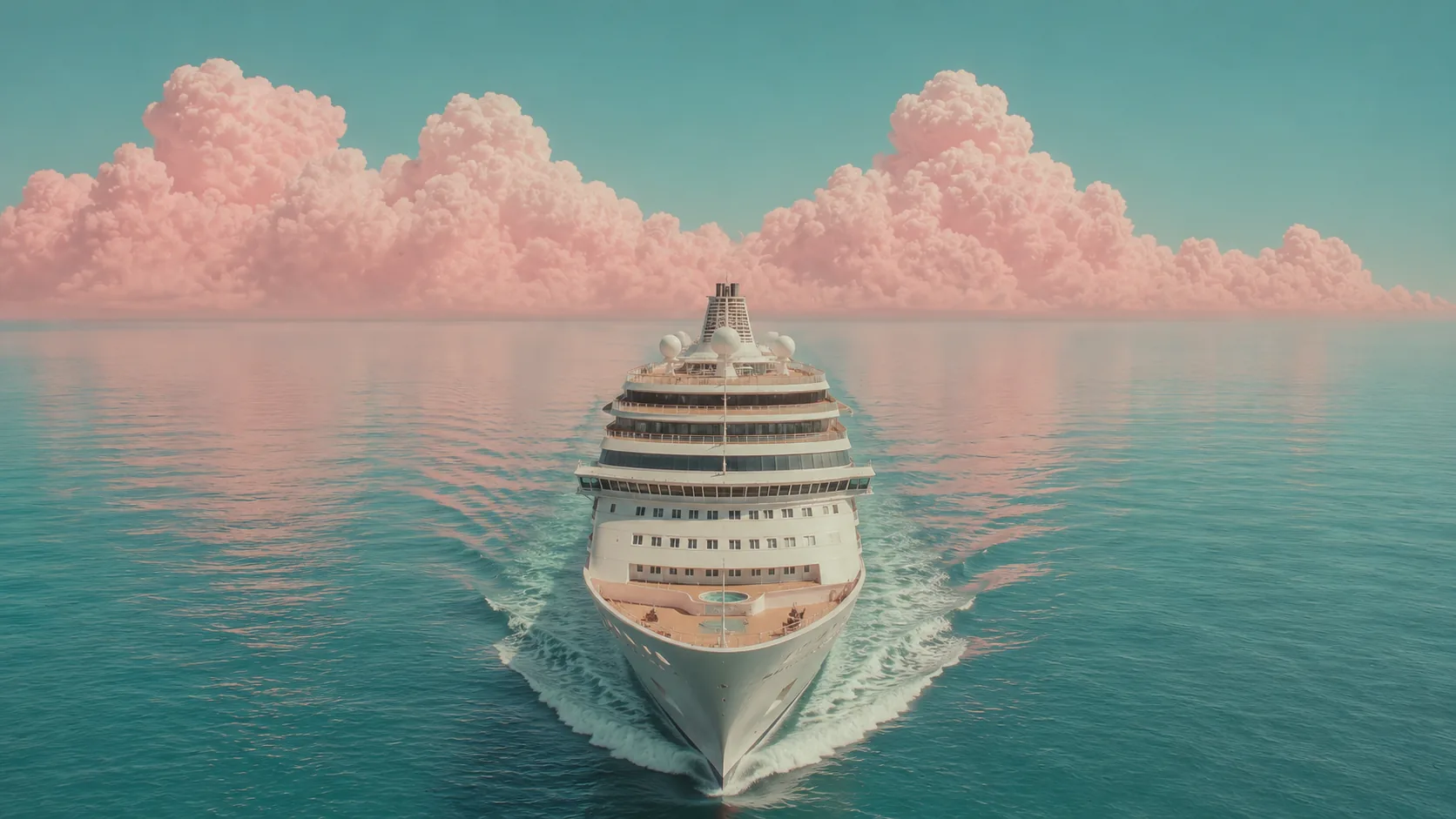
Twice a year the big cruise lines pick up their ships and move them across the Atlantic. The fleet follows the season, Europe through the summer and the Caribbean through the winter, and the trip between the two is a stretch of open water that can last a week or more without a scrap of land in sight. Crew call it the crossing. Ask ten of them how they feel about it and you will get two answers that barely sound like the same voyage. A crossing is a blessing for some departments and a slow grind for others, and which one you get comes down almost entirely to the badge on your uniform.
I have done the crossing in both directions, west in the autumn and back east in the spring. The part nobody explains before your first one is that a crossing is not a rest for the ship. The passengers are still on board and still paying for a holiday, and there is nowhere for any of them to go all day. No port, no shore excursions to thin the crowds out and give the ship a breather. Everyone stays aboard from breakfast to midnight, and the departments whose whole job is to keep a few thousand restless people fed and amused feel every hour of it.
The Departments That Feel It Most
Food and beverage takes the hardest hit. On a big ship the food barely stops, with something to eat available around the clock, and a crossing gives that operation a captive audience. Picture a few thousand passengers who are not going ashore, spending the whole day between the pool and the buffet, wandering back for another plate of whatever is on offer. The bars stay full from late morning, cocktails going out one after another, the children queuing for the tenth soft drink refill of the afternoon. The galley (kitchen) crew and the bar staff work that from opening to close with no port day to break the rhythm.
The entertainers have a stranger kind of exhausting. They spend the crossing inventing ways to fill the hours, with a full program of events in every lounge and on every deck. The catch is that they do not just organize it. They play. The same person running the afternoon trivia turns up an hour later teaching a dance class, then calling the deck games, then out on stage at night, switched on and smiling for most of the day. It looks like fun from a bar stool, and some of it is, but a week of being the most energetic person in every room wears someone down.
Then the shops and the casino, which live by the sea day. Crossings are nothing but sea days, and that is exactly when the two of them make their money. The shops usually open around eight or nine in the morning and stay open until eleven or midnight. The casino opens at roughly the same time and closes later still. On some ships the tables stay open until three or four in the morning before the last player is coaxed off a seat.
The Long Breaks in Between
None of this happens without relief, and the crossing does give some back in the middle of the day. The same sea day schedule that stretches the shifts out also opens real breaks inside them. A gap of two or three hours at lunch is normal, long enough to eat properly and still get your head down for a nap. There is usually a second break in the early evening to have dinner and reset before the night program starts. It is not a day off. But set against a port day, where the work is crammed around the hours the ship is in port, a sea day at least lets you breathe between the busy stretches.
By the Third Day the Ship Goes Quiet
This is what turns the crossing from an ordeal into something people look forward to. By about the third day everyone is tired in the same way at the same time, and the whole social side of the crew changes character. Nobody has the energy to party. The crew bar, usually the loudest room below deck, empties out early, and people finish a shift and go straight to the cabin.
The best of it is up on the open deck at night. Every ship has areas set aside for crew, and on a normal week they are packed, full of people talking and playing music, every chair taken. During a crossing those same decks go still. Walk out after your shift and you might find one other person there, reading a book under a light, and otherwise the whole stretch of deck to yourself. If the sea is flat on top of that, calm water stretching out to the horizon in every direction, it becomes about as peaceful an hour as the job ever gives you. Some of my favorite time at sea has been spent doing nothing at all on an empty crew deck in the middle of the Atlantic.
For Some Departments It Is the Easy Week
Not everyone is suffering through this. For a few departments the crossing is the softest week of the whole contract, and shore excursions is the clearest example. On a normal itinerary they are run off their feet, herding people onto the right coaches and chasing down the passenger who climbed onto the wrong shuttle and ended up on the far side of the island. On a crossing there is nothing to herd. Their whole job shrinks to sitting behind a desk and talking to curious passengers about the ports still to come and the excursions they might book once there is land again. They turn into the relaxed version of a salesperson on a salary, still technically frontline but barely breaking a sweat.
That gap cuts both ways. When you are wrecked on day five and you pass a colleague who has spent the day chatting behind a desk, it is easy to feel hard done by. But unless you have worked a department yourself, you have very little idea what its day looks like from the inside. The desk job you envy on the crossing might be the one drowning on port days while you are ashore. A crossing is a good week to give your colleagues the benefit of the doubt and save the score keeping for never.
The First Port After the Crossing
And then it ends. After days of nothing but water, the first port comes up over the bow. Land. A skyline, or just a harbor wall, and the whole crew lifts. To anyone who has never done a long crossing that sounds like a small thing, but seeing land again after a week without it hits somewhere you do not expect.
What to Sort Out Before You Sail
Plan a little before a crossing. Look at the itinerary before you leave and think about what you will want on the way. The small stuff is easy. A stash of snacks and a few bags of chips for the cabin goes on every crew shopping list. The bigger decisions are about where you buy things rather than whether you buy them. Electronics are usually a fair bit cheaper in the United States than in Europe, so if you have your eye on a new phone or a laptop, the side of the Atlantic you buy it on makes a real difference to the price.
The same logic covers the two bits of admin that follow crew everywhere, a bank account and a phone plan. Where you open them matters as much as that you do. A US bank account is handy for anyone working the ships, and a crossing that ends in the States is a good chance to open one. Take your crew ID ashore and call in at as many branches as your port time allows. Conditions and fees vary a lot from one to the next, and it pays to compare before you commit. In my experience European banks are stricter, with more documents required from a non resident. If a US account is on your list, the American ports are the easier place to get it done. None of this is urgent while you are mid ocean. It is just far cheaper to have thought about it before you are standing in a port with half a day and a list you are inventing on the spot.
Do enough crossings and you stop dreading the middle days and start guarding them, because an empty deck and a flat ocean, in a week where the crew are too tired to bother you, turn out to be rarer and better than they sound.
Nobody loves the middle of a crossing while they are living it. Ask the same crew a month later, back in the port day scramble, and the still days at sea are the ones they miss.